

Mining the Public Domain
Why these characters deserve a second chance
Public Domain Day is almost upon us, and it gives me a chance to reflect on the importance of the public domain.
To start off with, if you have no idea what I’m talking about, the public domain is the collection of intellectual property that is owned collectively by all of us. It’s not under copyright and you can freely download, distribute, and exhibit these works — but you can also use elements of them in whole or in part in your own work.
Most people probably equate this with the slew of low-budget horror movies that began with Winnie-the-Pooh: Blood and Honey and continued with Blood and Honey II, Mickey’s Mousetrap, Popeye the Slayer Man, and probably a whole lot more.
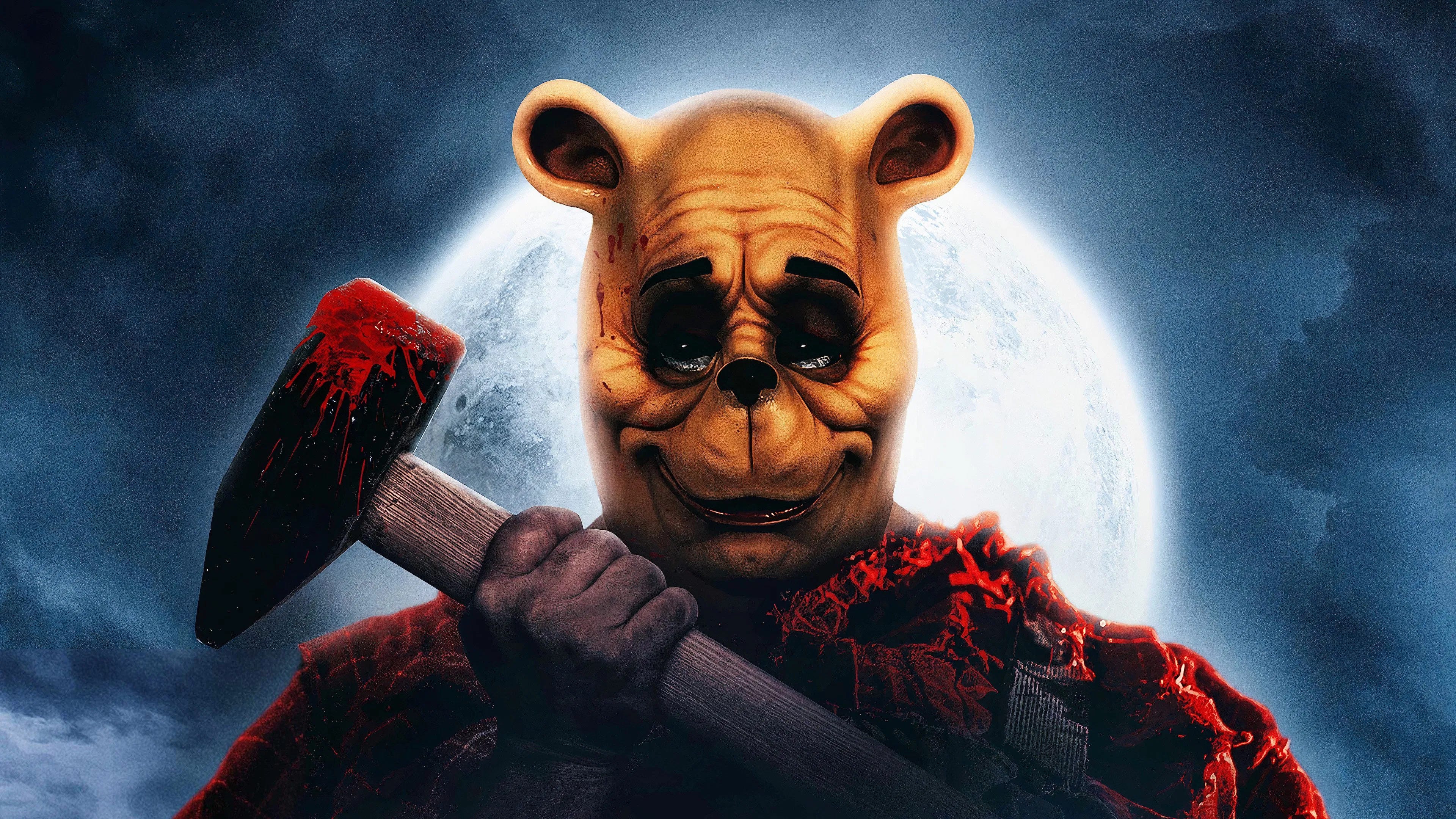
For the record, I don’t begrudge the makers of these films. I’ve got no interest in what they’re doing. The cool thing about the public domain is that there are no rules, so if they want to turn these characters into slasher icons, that’s their business.
But there is so much more that can be done with the public domain. For instance, I still maintain that the best movie based on something from the public domain is 1999’s 10 Things I Hate About You.
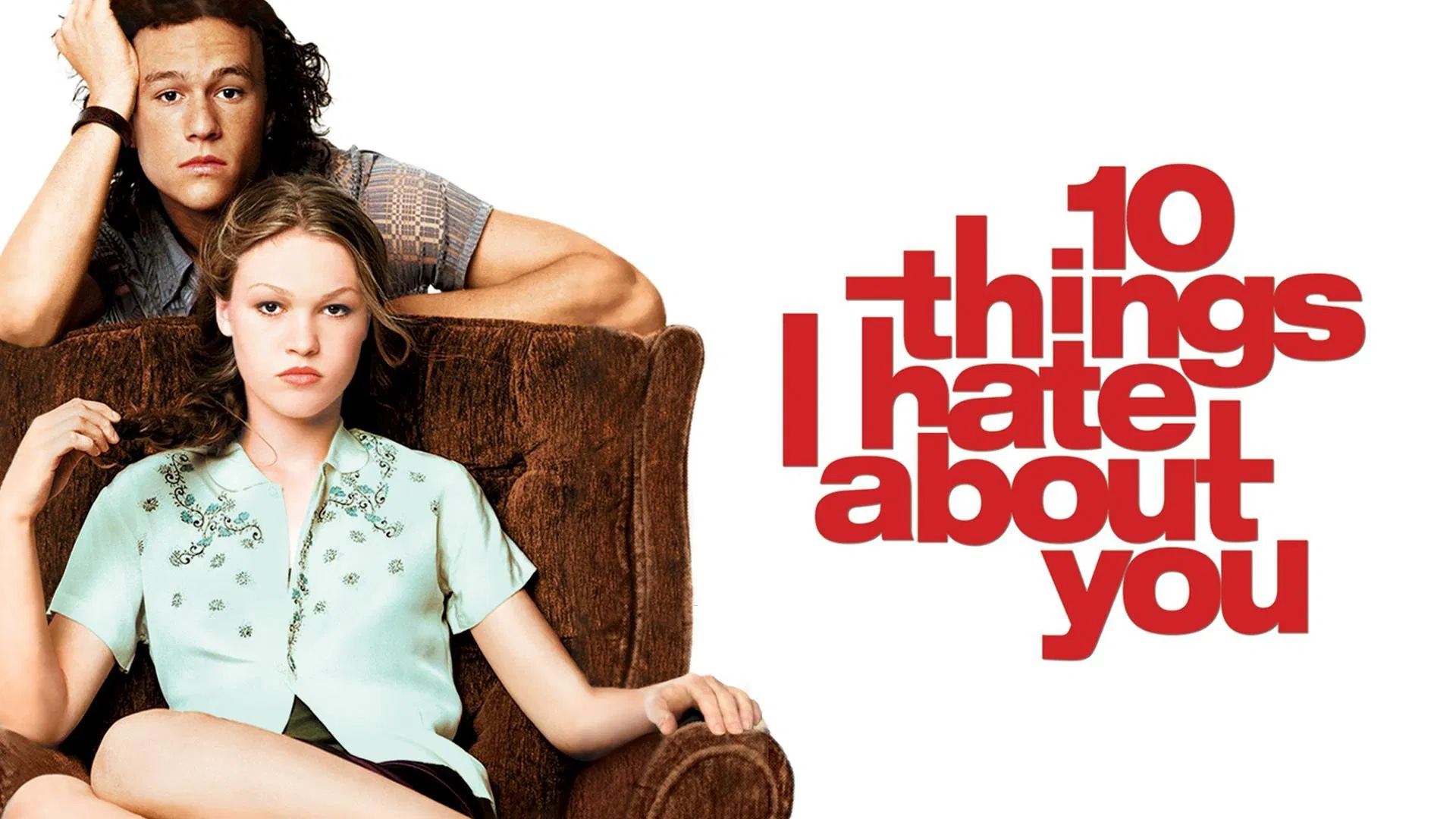
Yeah, that came from the public domain. Based on Shakespeare’s play, The Taming of the Shrew. And it shows how malleable many of these concepts and characters can be. As another example, take Dashiell Hammet’s Red Harvest, which entered the public domain this past year. That story has been told and retold in different versions, with Yojimbo putting the story of the Continental Op in Edo era Japan, A Fistful of Dollars ripping off Yojimbo and putting it in the Old West, or Brick switching it to a high school setting.
Why not create your own stuff?
This is an argument I hear from a lot of people about using the public domain. They say that using the public domain is somehow “cheating” and that people who do this aren’t creative at all.
And to that, I say “bullshit.”
I have created a lot of my own work. Thirty novels and counting. But there is something fun about the challenge of using stuff in the public domain. Necessity is the mother of invention, after all, and having a template to work from can lead to some creative thinking in how to make this work in a different setting. Or even how to make it work from a modern storytelling perspective.
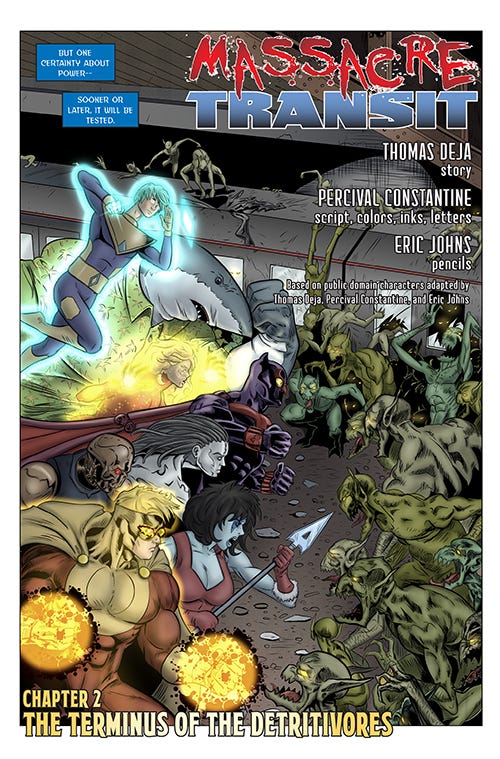
The comic project, Paragons of Earth, that I worked on started from a simple prompt: “Recreate Zack Snyder’s Justice League with public domain characters.” These sorts of prompts appear in public domain superhero groups a lot, and for the most part, they’re just fun exercises.
This one stuck with me and I started sketching out new designs for the characters. When I told my buddy Thomas Deja about this, he began contributing ideas, and soon we had the makings of something. We brought on Eric Johns, whose brilliant pencils brought the characters to life.
We unfortunately weren’t able to do more than one issue (available in both print and digital formats, in case you’re curious). But it did give me an urge to do more stuff with public domain characters.


Take for example one character that I’m working on now, Lady Satan. The following comes from her description on the Public Domain Super Heroes website:
Lady Satan and her fiancé were victims of a German bombing while on a ship. It sunk, and her fiancé died. Thus, Lady Satan took an oath to be a foe of the Nazis. Donning a mask and waltzing about in an evening dress, Lady Satan traveled unnoticed through the streets of Nazi occupied France as she fought the German invaders.
In her third appearance, she was a sorceress who fought against the occult instead of Nazis. No explanation for the change in methods or powers was given.
So we’ve got a Nazi-hunting woman wandering the streets of Nazi-occupied France — very cool to begin with. But then she gets retooled without explanation into a sorceress battling the occult — also cool in its own right. How does that change happen? That’s a story to explore right there.
Or for a darker turn, what about the Avenger?
Wealthy scientist Roger Wright became the superhero known as the Avenger for one reason: To avenge the death of his brother, who was tortured and killed by Soviet agents. … The Avenger mainly focused on thwarting the schemes of Soviet forces, both in his native Empire City and around the world.
Steve Englehart already showed in his Captain America run how problematic a commie-smashing superhero could be in the era of the Red Scare, so that’s a different lens to look at a character like the Avenger.
And not all characters have to be limited to their original era. Just like Batman, Superman, and other heroes keep updating with the times, so too can the likes of Atoman or the Arrow. In fact, let’s look at the Arrow:
Hidden under a crumpled red suit and face-covering cowl, he was a man of mystery without name or background. A no-nonsense fellow, the Arrow coldly shot arrows into hands, shoulders, and hearts of slobbering fiends who were always putting blondes into bondage.
Later, it was learned he was a U.S. intelligence agent named Ralph Payne.
Here we have the first archer in comics, predating even Oliver Queen. But how does a U.S. intelligence agent become an archery-themed vigilante? That also sounds like a story worth exploring. And it doesn’t have to be set in the late 30s when the character was created.
These are examples of some of the stories I’ll be exploring in an upcoming serial I’m tentatively titling Pulse Domain. If you’re interested in this, you can subscribe for free to be kept in the loop.
Very cool stuff! Looking forward to reading more. I’m working on a public domain character, too: Blackout, who appeared in one ten-page comic in 1941 and then never again. Until now!
Pulse Domain sounds like a very interesting project. A lot of those Golden Age characters only had a few appearances, so it's cool that they're getting more attention after nearly a century of silence.